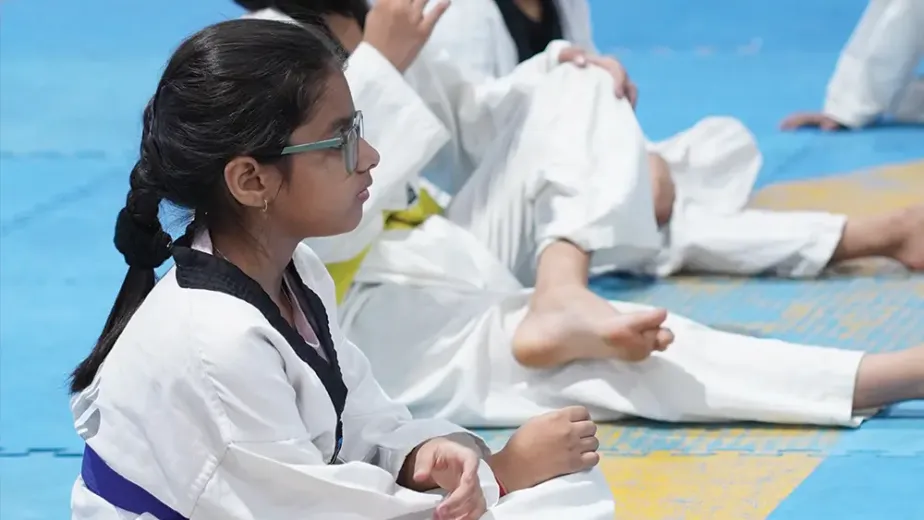
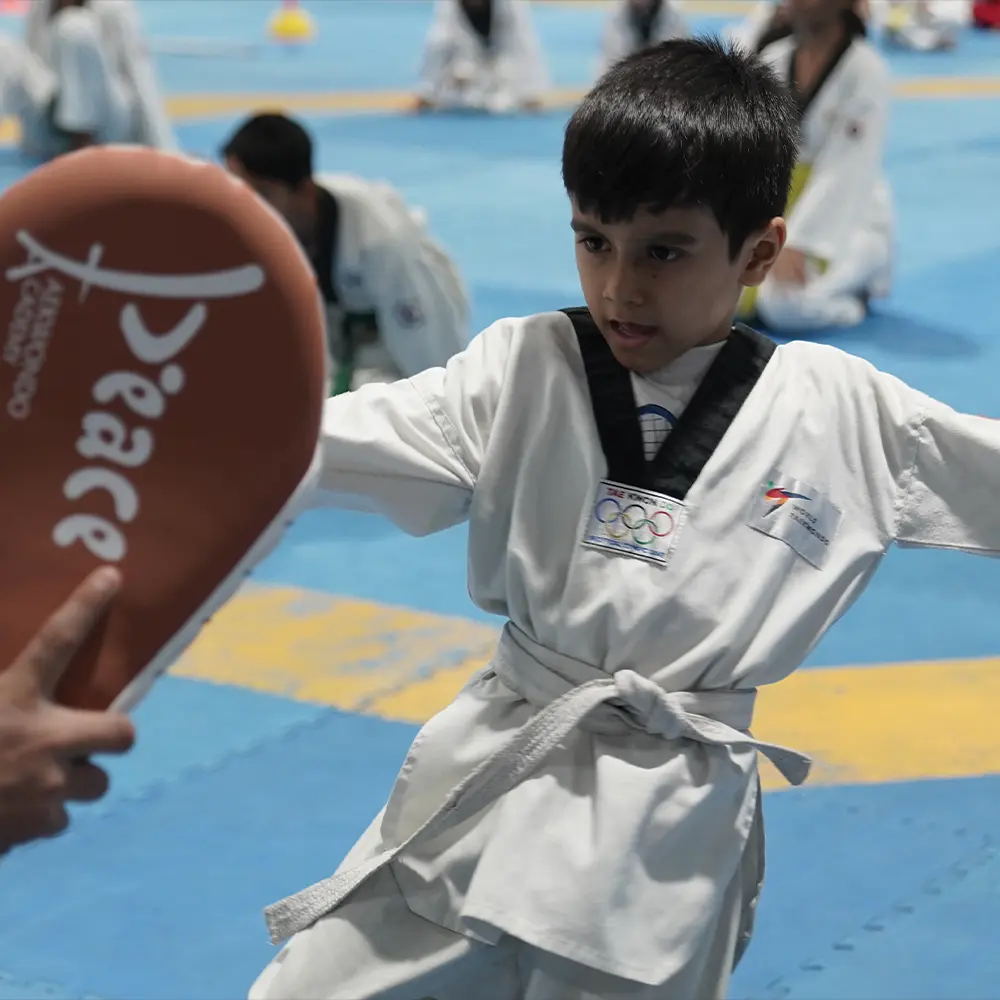
There is a moment every parent recognises. It happens somewhere between a child’s first run across a park and the first time they kick a ball through the air with real intention. Something shifts. The body finds its rhythm. The eyes light up with the particular kind of focus that screens never seem to produce.
That moment is not accidental. It is the result of a developmental window, a period in early childhood when the brain and body are primed for physical learning in a way they will never quite be again. And the science is clear: the children who step through that window early, who find a sport before the age of 10, carry the benefits of that experience for the rest of their lives.
This is not about creating professional athletes. It is about creating capable, confident, disciplined human beings. Sport is simply one of the most effective tools we have ever found for doing that.
The Developmental Window Every Parent Should Know About
Child development researchers have long identified what is known as the “critical period” for motor skill acquisition, a window roughly between the ages of 4 and 12 during which children develop fundamental movement skills at a rate that is simply not replicable later in life.
During this period, the brain’s neural pathways are forming at an extraordinary speed. Physical activity during this window does not just build muscles. It builds the architecture of coordination, balance, spatial awareness, reaction time, and proprioception, the body’s ability to understand where it is in space, that will underpin every physical activity the child ever attempts, from sport to dance to simply navigating the world safely.
Children who are physically active during this window develop more complex and efficient neural networks related to movement than those who are not. More critically, those networks remain. The child who learns to balance, to fall and recover, to time a movement precisely, to control their body under pressure, that child carries those physical capabilities into adulthood, even if they never compete in a sport again.
The window between 4 and 12 is not the only time a child can learn to move. But it is the time when movement is learned most deeply, most efficiently, and most permanently.
Start early, and the foundation is solid. Start late, and you are always building on ground that is slightly less stable than it could have been.
What Sport Actually Does to a Child’s Brain
The physical benefits of sport are well known. Cardiovascular health, bone density, muscle development, and coordination. These are real and important. But the cognitive and emotional benefits are arguably even more significant, and they are less often discussed with parents making decisions about their child’s activities.
1. Executive Function
Executive function is the brain’s management system. It governs planning, decision-making, impulse control, working memory, and the ability to shift attention from one task to another. It is, in many ways, the cognitive foundation of academic achievement, professional success, and healthy relationships.
Physical activity, particularly sport involving rules, strategy, and social interaction, is one of the most powerful developers of executive function in childhood. A child playing a sport is constantly making decisions under time pressure, managing their impulses, remembering and applying rules, reading the actions of others, and adapting their behaviour in real time. Every training session is, in effect, an executive function workout.
Research consistently shows that physically active children perform better academically than their sedentary peers. Not because sport makes children smarter in a narrow sense, but because sport develops the cognitive infrastructure that makes learning more effective across all domains.
2. Emotional Regulation
Sport puts children in situations of genuine pressure. They experience the discomfort of losing, the frustration of a skill they cannot yet master, the anxiety of competition, and the elation of achievement. When those experiences happen in a structured, supported environment with coaches and teammates, children learn to process them constructively.
This is not passive learning. A child who is coached through the experience of losing a match, who is taught to analyse what went wrong, to respect the opponent who won, and to come back to training the next day with renewed focus, is developing emotional regulation skills that are directly applicable to every difficult moment they will face in life.
Sport is, in this sense, one of the most sophisticated emotional education systems available to a child. It is just disguised as physical activity.
3. Social Intelligence
Team dynamics, leadership, following instructions, supporting a teammate, managing conflict, and celebrating shared success, these are the building blocks of social intelligence. Children who participate in group sports from an early age develop these skills through lived experience rather than theory.
They learn that their actions affect others. That the team rises and falls together. That disagreement can be productive if handled with respect. That the coach’s authority serves a purpose beyond the moment. These are not trivial lessons. They are the foundations of every meaningful relationship and professional collaboration the child will ever enter.
The 10-Year Rule and Why Starting Early Matters
You may have heard of the 10,000-hour rule, the idea popularised by Malcolm Gladwell that world-class expertise in any domain requires approximately 10,000 hours of deliberate practice. Whether or not you accept the specific number, the underlying principle is well established: mastery takes time, and time requires an early start.
In sport, researchers have identified a related concept: the 10-year rule. Elite athletes in almost every discipline have, on average, been training seriously for at least 10 years before reaching the highest levels of their sport. A child who begins serious training at age 8 is eligible for senior competition by 18. A child who begins at 13 may not reach the same ceiling by the same age.
This does not mean that every child who starts sport at 4 will become an elite athlete. Most will not, and that is entirely fine. But it does mean that the child who starts early has options. They can go as far as their talent, work ethic, and desire take them. The child who starts late is always working within a narrower window.
Every elite athlete you have ever admired started somewhere. Most of them started young. The ones who started early had something the late starters never quite got back: time.
The Non-Athletic Benefits That Last a Lifetime
Let us be direct about something that is rarely said clearly enough in conversations about children and sport: the majority of children who participate in sport will not become professional athletes. They will become engineers, doctors, teachers, entrepreneurs, parents, and community members. And the benefits they carry from their years of sport will serve every one of those paths.
Discipline and Consistency
A child who trains twice a week for years learns, at a cellular level, that showing up consistently produces results. They learn that progress is not linear. That a bad training session is not a reason to quit. That the days when you do not feel like going that are often the most important days to go. These lessons, learned in a sports hall or on a field, translate directly into the capacity for disciplined work in every domain.
Respect for Authority and Process
Sport introduces children to the concept of earned authority. A coach’s instructions must be followed not because the child has no choice, but because the child understands that the coach’s knowledge and experience serve their development. Learning to receive instruction, to trust the process even when you do not immediately see the results, is a form of emotional and intellectual maturity that many adults never fully develop.
Resilience
Sport is one of the few environments in modern childhood where failure is structured, frequent, and consequence-free in a way that makes it genuinely educational. Every lost match, every missed technique, every competition that did not go as hoped is a real experience of disappointment that the child must process and move through. Done well, sport produces children who do not fear failure. They understand it as data.
Physical Health as a Habit
Children who participate in sport from an early age are significantly more likely to remain physically active as adults than those who do not. The habit of movement, established early and reinforced through years of practice, becomes part of the child’s identity. They do not experience exercise as a chore. They experience it as a natural part of how they live.
What to Look for When Choosing a Sport for Your Child
Not every sport is right for every child, and not every environment is right for every child who has chosen a sport. Here are the questions worth asking before you commit:
- Does the sport match your child’s temperament? Some children thrive in individual sports where success or failure rests entirely with them. Others find their greatest motivation in team dynamics. Watch how your child naturally plays before you decide.
- Is the coaching environment one of development or just results? A good coach celebrates effort, teaches through failure, and adjusts their approach to the individual child. A coach who only cares about winning produces anxious, brittle athletes. Ask about the coaching philosophy before you enrol.
- Does the academy have structured progression? The best sports environments have a clear pathway from beginner to advanced. A child should always know what they are working toward and what they need to do to get there.
- Is there a community around the sport? Children stay in sports when they have friends in sports. Look for an environment where your child will build relationships, not just skills.
- Does your child actually enjoy it? This sounds obvious, but it is frequently overlooked. Enjoyment is not the only criterion, but a child who fundamentally dislikes their sport will not persist through the difficult periods. Fun is not a luxury. It is a retention mechanism.
The Right Age to Start: What the Research Says
While every child develops at their own pace, here is a general framework based on developmental research:
- Ages 3 to 5: Focus on fundamental movement skills through play-based activity. Running, jumping, throwing, catching, and balancing. Formal sport is less important than physical exploration.
- Ages 5 to 8: Introduction to structured sport in an age-appropriate format. Short sessions, simple rules, emphasis on fun and participation rather than competition.
- Ages 8 to 12: Development of sport-specific skills, introduction to tactics and strategy, more structured training, and the beginning of competitive experience.
- Ages 12 and above: Specialisation becomes appropriate for children who have identified a sport they love and wish to pursue seriously. Before 12, multi-sport participation is generally recommended to build a broad athletic foundation.
The key takeaway is this: there is no such thing as starting too early for movement and physical activity. There is, however, such a thing as starting too late for the window of maximum developmental benefit.
A Final Word for Parents
You do not need to know where your child’s sport will take them when you sign them up for their first session. You do not need to imagine them on an Olympic podium or in a professional kit. You just need to give them the chance to find out what they are capable of.
The child who starts sports before 10 is not guaranteed anything. But they are given something invaluable: time. Time to develop their body and their character in the environment that has shaped more capable, resilient, and self-aware human beings than almost any other. Time to discover what discipline feels like. What teamwork feels like. What it means to fail and come back anyway.
That is what sport gives a child. And it starts much earlier than most parents realise.
At Peace Taekwondo Academy, we welcome children from 3 years of age into our structured Kids Development Program. Our coaches are trained to develop young athletes with age-appropriate methods that build confidence, discipline, and a genuine love for the sport. Book a free trial session today at www.peacetaekwondo.com or WhatsApp us at +91 90159 91818.