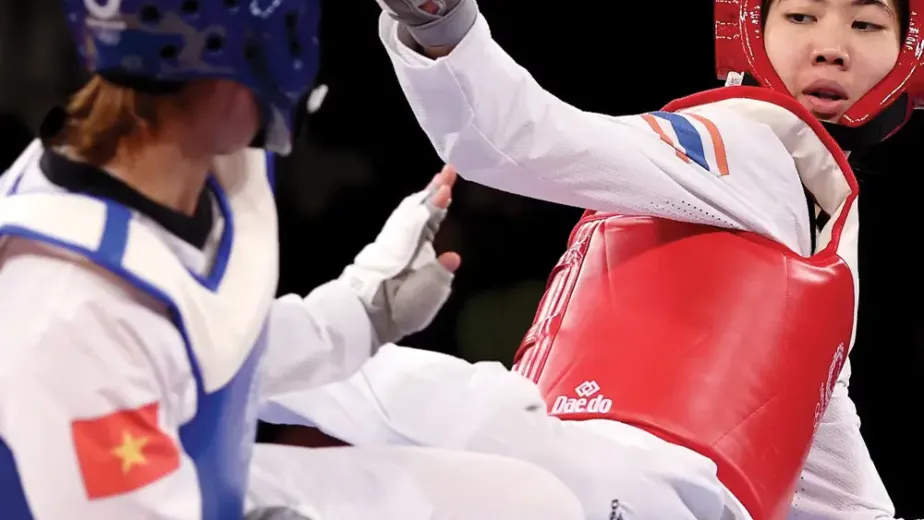
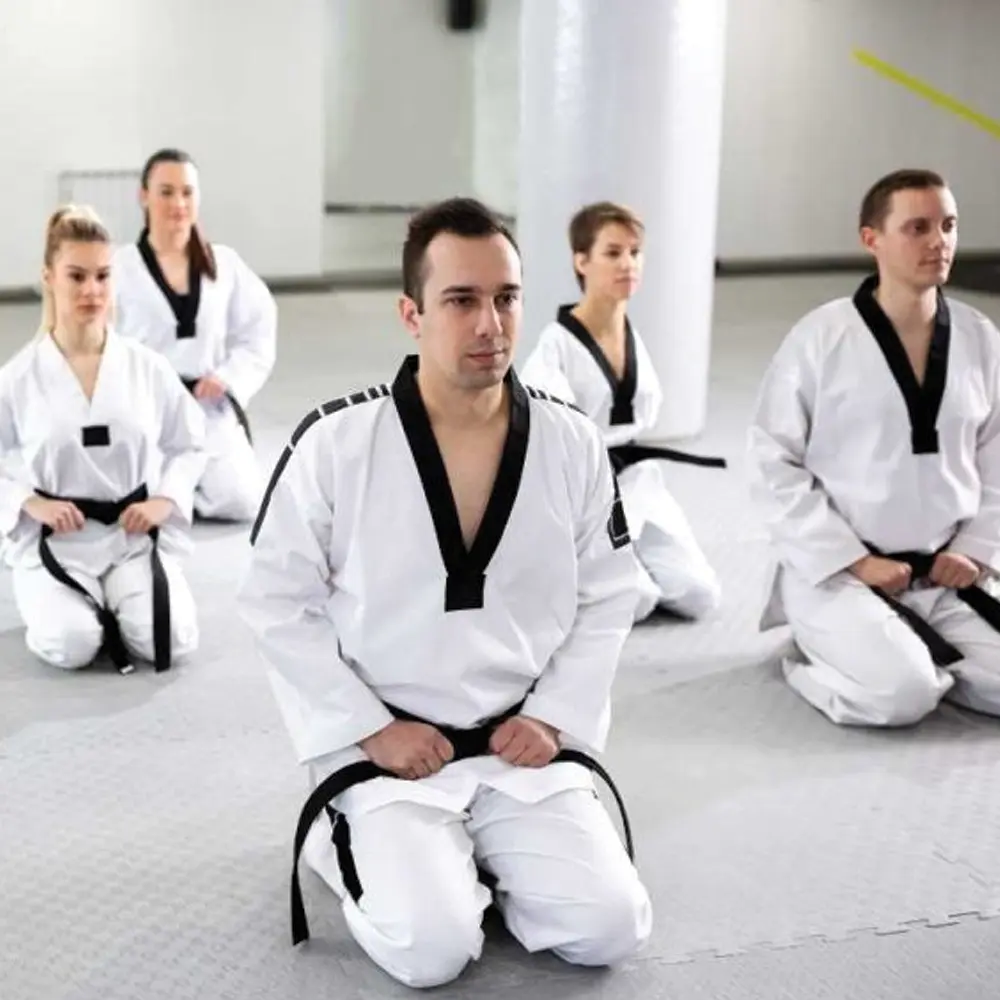
There is a version of Taekwondo that exists in the popular imagination. High kicks. Spinning techniques. Olympic competitions. Children in white uniforms bowing to their coach.
That version is real. But it is only a fraction of what Taekwondo actually is and what it actually does to the people who practice it.
Taekwondo is one of the most comprehensively beneficial physical disciplines available to a human being at any stage of life. Not despite the fact that it is a martial art, but because of it. The demands it places on the body and the mind are precisely the demands that produce growth, health, and resilience across every age group.
Here is what the research says, and what decades of practice confirm, about what Taekwondo does for the people who commit to it.
The Physical Benefits
Cardiovascular Health
Taekwondo training is one of the most effective forms of cardiovascular conditioning available. A typical training session combines aerobic endurance work in the warm-up and conditioning phases with high-intensity anaerobic bursts during sparring and combination drills. This combination of aerobic and anaerobic exercise is precisely the training profile recommended by cardiologists and sports scientists for optimal heart health.
Regular Taekwondo training has been shown in multiple studies to reduce resting heart rate, lower blood pressure, improve VO2 max, and increase cardiovascular efficiency. These benefits appear across all age groups, including in older adults who take up the sport later in life.
Strength, Power, and Muscular Development
The kicking techniques that define Taekwondo require the explosive contraction of muscle groups across the entire lower body, including the glutes, quadriceps, hamstrings, calves, and hip flexors. Executing these techniques repeatedly builds functional strength in a way that closely mirrors the demands of daily life and athletic performance.
Unlike isolated weight training exercises, Taekwondo techniques develop strength through full ranges of motion, in multiple planes of movement, and under time pressure. This produces athletes with a quality of functional strength and explosive power that transfers effectively to other sports and to physical life generally.
Flexibility
The high kicks of Taekwondo, particularly head-level and spinning techniques, require a degree of hip and hamstring flexibility that most people simply do not possess when they begin training. The consistent stretching and mobility work embedded in Taekwondo training programs progressively develops this flexibility over time.
This is not merely an athletic benefit. Flexibility, particularly in the hips and posterior chain, is directly associated with reduced lower back pain, better posture, lower injury risk in daily activities, and improved quality of movement in older age. A person who trains in Taekwondo for years moves better and is less likely to be injured in everyday life than a person who does not.
Balance and Coordination
Executing a spinning heel kick requires the practitioner to rotate 360 degrees while maintaining balance on one leg, locate a target in the rotation, generate power through the hip and leg, and land in a stable position ready to defend or continue. The balance and coordination required to do this even adequately are extraordinary.
Training these skills develops the neural pathways responsible for proprioception and balance to a degree that few other activities match. Research has shown that Taekwondo practitioners demonstrate significantly superior balance scores compared to non-practitioners of the same age, and that this advantage is particularly pronounced in older practitioners, where balance is a critical factor in fall prevention and independence.
Weight Management
A typical Taekwondo training session burns between 400 and 700 calories, depending on the intensity and the practitioner’s body weight. Combined with the muscle development that builds a higher resting metabolic rate, regular Taekwondo training is a highly effective tool for weight management across all age groups.
Unlike purely cardio-based exercise, Taekwondo’s combination of strength, power, and endurance training produces a body composition change that improves both appearance and function. Practitioners tend to lose body fat while gaining or maintaining muscle, which is the optimal outcome for both health and performance.
The Mental Health Benefits
The mental health benefits of Taekwondo are perhaps less discussed than the physical ones, but they are equally significant and in some cases more so. We are living through a period of unprecedented mental health challenges, particularly among young people. The tools that help are the ones that combine physical activity, social connection, purposeful challenge, and structured progression. Taekwondo provides all of these simultaneously.
Stress Reduction
Physical exercise is one of the most effective stress reduction tools available to human beings, and the evidence for this is overwhelming. Exercise reduces levels of cortisol and adrenaline, the body’s primary stress hormones, and stimulates the production of endorphins, serotonin, and dopamine.
Taekwondo amplifies these effects through the focused, almost meditative quality of training. When you are learning a new combination or sparring against an opponent, you cannot simultaneously be thinking about your inbox, your relationship difficulties or your financial worries. The training demands your full cognitive presence. This enforced presence, maintained for the duration of a training session, produces a quality of mental rest that passive entertainment simply cannot replicate.
Anxiety and Depression
Multiple peer-reviewed studies have demonstrated that regular Taekwondo training reduces symptoms of anxiety and depression across a range of populations, including children, adolescents, adults, and older people. The mechanisms are multiple: the chemical effects of exercise on brain function, the social connection of training in a group, the sense of purpose and progress provided by the belt system, and the development of self-efficacy through the mastery of difficult physical skills.
For children experiencing anxiety, Taekwondo provides something that medication and therapy alone often cannot: a structured environment where they face and overcome real challenges, develop genuine capability, and build an evidence-based belief in their own resilience. That belief is not told to them. It is earned through their own actions.
Self-Confidence
Confidence is not the same as self-esteem, and the distinction matters enormously for parents and educators. Self-esteem can be taught to a child. Confidence must be built through experience.
Taekwondo builds confidence through the accumulation of real achievements. The child who achieves their yellow belt has done something genuinely difficult. They trained consistently for months. They prepared for an assessment. They performed under pressure. The confidence they feel afterwards is not a participation trophy. It is a reasonable response to having done something hard and succeeded.
This confidence compounds over time. Each belt, each competition, each new skill mastered adds another layer to a foundation of genuine self-belief that the child carries into every area of their life.
Focus and Attention
Attention deficit and difficulty with sustained focus are among the most common challenges reported by parents and teachers of children today. The causes are complex and contested. But one of the most effective interventions is also one of the oldest: physical activity that demands focused attention.
Taekwondo training requires sustained, directed attention in a way that few activities match. The practitioner must simultaneously monitor their own body position, the position of their partner or opponent, the instructions of their coach, and the execution of complex motor sequences. This is an extraordinarily demanding attentional load, and practising it regularly appears to build the attentional capacity that many children struggle with.
Multiple studies have found that regular Taekwondo training improves attention, concentration, and academic performance in children, including those with attention difficulties. This is not a magic solution, but it is a meaningful and evidence-based tool.
Benefits Across the Age Groups
For Young Children, Ages 3 to 10
For the youngest practitioners, Taekwondo is primarily about movement, play, and the introduction of structure. Children in this age group benefit from the development of fundamental motor skills, including balance, coordination, and spatial awareness. They begin to understand the concept of following instructions in a group setting, respecting authority, and working toward a goal. The social environment of the training group builds communication skills and the early habits of teamwork.
Perhaps most importantly, young children in Taekwondo develop a positive relationship with physical activity and structured learning that sets the pattern for decades of healthy behaviour.
For Adolescents, Ages 10 to 18
Adolescence is one of the most turbulent periods of human development. Identity is forming. Social hierarchies are intensifying. Academic pressure is mounting. Emotional regulation is still incomplete. Taekwondo provides adolescents with exactly what this period demands: a structured environment where they are challenged, supported, and measured against clear standards rather than against their peers.
The competitive dimension of Taekwondo, which becomes increasingly relevant for this age group, teaches adolescents how to manage pressure, how to prepare rigorously for a high-stakes situation, and how to process both success and failure with maturity. These are not abstract lessons. They are embodied experiences that shape the adolescent’s developing character in lasting ways.
For Adults, Ages 18 to 50
For adults, Taekwondo offers a complete physical training solution and a powerful antidote to the mental pressures of professional and family life. The physical benefits of cardiovascular conditioning, strength, flexibility, and weight management are all highly relevant to this age group. But equally important is what Taekwondo does for the adult mind.
Training in a martial art as an adult requires a particular kind of humility and commitment that many adults find deeply valuable. You must be willing to be a beginner. To receive instruction. To be corrected by a coach who may be younger than you. To fail in front of others and come back the next session. This practice of deliberate humility in a culture that increasingly rewards the performance of confidence is, for many adult practitioners, one of the most valuable aspects of their training.
For Older Adults, Ages 50 and Above
The benefits of Taekwondo for older adults deserve particular mention because they are often overlooked by a sport that is popularly associated with youth and athleticism.
For older practitioners, Taekwondo provides a framework for maintaining the physical capacities that are most at risk with age: balance, coordination, lower body strength, cardiovascular fitness, and cognitive sharpness. The balance training embedded in Taekwondo practice is directly relevant to fall prevention, which is one of the most significant health risks for older adults.
The social dimension of training in a group is equally important. Loneliness and social isolation are among the most significant risk factors for cognitive decline and reduced quality of life in older age. A regular training group provides structured social connection around a shared purpose.
Many Taekwondo academies adapt their training approach for older practitioners, emphasising form and technique over high-impact competition preparation. The art accommodates this naturally, since its technical depth provides a lifetime of learning that does not require the body to absorb the demands of elite competitive training.
Why Taekwondo Specifically
There are many excellent martial arts and many excellent sports. What makes Taekwondo particularly well-suited to delivering these benefits across age groups?
First, its structure. The belt system provides a universal framework for progression that is accessible to a child of 4 and a retiree of 65. The levels are clear, the requirements are objective, and the achievement of each level is genuinely earned.
Second, it’s Olympic status. Taekwondo is an Olympic sport, which means it has a fully developed international competitive pathway for those who wish to pursue it seriously. The sport has a global governing body, standardised rules, and an established ranking system that connects a child training in Gurugram to a competition pathway that reaches the Olympic Games.
Third, its values. The philosophical foundation of Taekwondo, courtesy, integrity, perseverance, self-control, and indomitable spirit, is not decoration. These values are actively taught and reinforced in every session at a serious academy. They are part of the curriculum in the deepest sense.
And fourth, its accessibility. Taekwondo requires no expensive equipment to begin. No particular body type has an inherent advantage. It can be practised by the very young and the very old, by the highly athletic and the physically cautious, by the competitive and the recreational. Few disciplines offer this breadth of access alongside this depth of benefit.
The Decision
If you are reading this and considering whether Taekwondo is right for you or your child, the honest answer is: try it. A single trial session in a well-run academy will tell you more about whether this is the right environment than any article can.
What you will likely find is a space where the physical and the mental are not separate concerns but a single integrated discipline. Where the work is genuinely hard and the progress is genuinely earned. Where the values spoken about on the website are actually practised on the mat.
That is what Taekwondo is. And what it does for the people who commit to it is, in the end, much more than a sport.
Peace Taekwondo Academy welcomes practitioners of all ages and all levels of experience. From our Kids Development Program for children aged 3 and above, to our Elite High-Performance training for competitive athletes, to our fitness and self-defence programs for adults, we have a program designed for exactly where you are right now. Book a free trial at www.peacetaekwondo.com or WhatsApp +91 90159 91818.