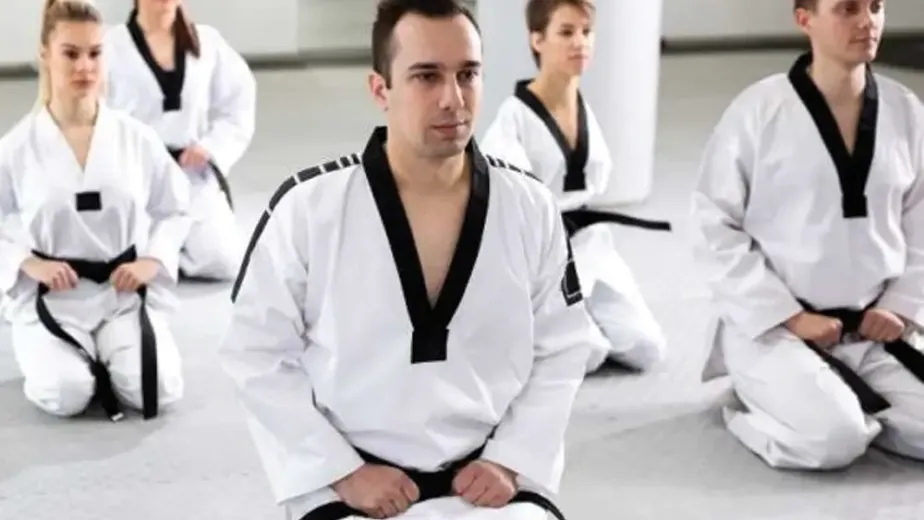
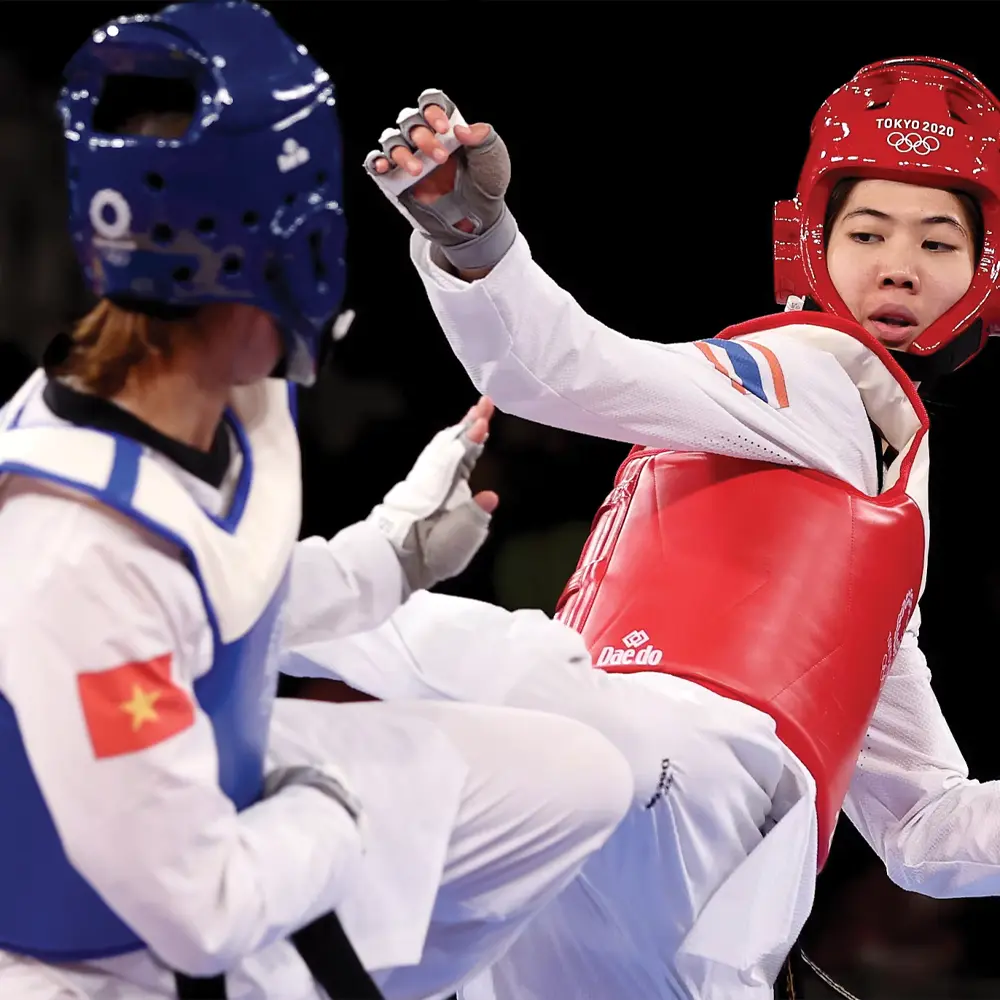
Every four years, a handful of Taekwondo athletes step onto the biggest stage in sport. They represent their countries, carry their flags, and compete in front of the world. They are the ones who made it all the way.
But behind every athlete at an Olympic Games, there is a pathway. A sequence of competitions, rankings, qualifications, and selection criteria that stretches back years, sometimes decades, from the Olympic final to the first session in a local training hall.
Most parents who enrol their children in Taekwondo are not thinking about the Olympics. They are thinking about discipline, fitness and confidence and finding a good activity for Tuesday evenings. And that is entirely right.
But some parents, and some children, want to know what is actually possible. They want to understand the full length of the road, from that first session to the highest level the sport offers.
This article is for them.
Understanding the Taekwondo Competitive Structure
Before understanding the Olympic pathway, it helps to understand how competitive Taekwondo is organised. The sport operates at several levels simultaneously, each feeding into the next.
Level 1: District and State Competitions
The entry point for competitive Taekwondo in India is the district circuit. State associations affiliated with India Taekwondo organise district and state-level championships across age categories, including Sub-Junior, Junior, and Senior, and across weight categories that ensure athletes compete against opponents of comparable size.
For most young athletes, these are the first competitions they enter. They are where technical skills are tested under real competition conditions for the first time. Winning at the district and state levels brings the athlete to the attention of national selectors and builds the competitive experience that is the foundation of everything above it.
Level 2: National Championships
Athletes who perform at the state level can qualify for India’s national Taekwondo championships, which are organised by the Indian Taekwondo and the Taekwondo Federation of India. The national championships are the primary mechanism for determining All India Rankings, which govern selection for international representation.
A national championship medal is a significant achievement. But for athletes aiming at the Olympic pathway, the national championships are not the destination. They are a qualification mechanism for the level above.
Level 3: International Open Tournaments (G-Ranked Events)
World Taekwondo manages a global ranking system for senior athletes. Points are accumulated through participation in sanctioned international events, which are graded from G1 (the highest) through G2 and open events. These include competitions such as the Australian Open, the CJ Vietnam Open, the China Open, the Riga Open, and many others.
Indian athletes who have earned international selection can participate in G-ranked events. Points accumulated at these events contribute to their World Taekwondo ranking, which is the primary metric used for Olympic qualification.
Level 4: Continental and World Championships
The Asian Taekwondo Championships and the World Taekwondo Championships are the most prestigious non-Olympic events in the sport’s calendar. Performance at these events carries significant World Ranking points and is a direct indicator of readiness for Olympic competition.
The World Championships in particular are the clearest signal of an athlete’s global standing. A medal at the Worlds is, for most athletes, the peak of their competitive career. For some, it is the stepping stone to the Olympic Games.
Level 5: Olympic Qualification Events
Olympic qualification in Taekwondo is determined through a combination of World Ranking, Continental Qualification Tournaments, and, in some cycles, host country allocations. The specific qualification mechanism varies between Olympic cycles and is determined by World Taekwondo.
For the Paris 2024 cycle, the primary qualification routes were through World Ranking and Continental Olympic Qualification Tournaments held in the year before the Games. The LA 2028 qualification process will follow a similar structure, with the specific criteria to be published by World Taekwondo in due course.
The World Taekwondo Ranking System Explained
The World Taekwondo ranking system is the engine that drives the Olympic qualification process. Understanding it is essential for athletes and families who are serious about the Olympic pathway.
Rankings are calculated on a rolling basis. Points are earned at sanctioned international competitions, with higher-grade events awarding more points. The ranking considers results from a defined period, typically 24 months, with more recent results weighted more heavily than older ones.
An athlete’s ranking determines which events they can access and their seeding at those events. Higher-ranked athletes receive favourable draws, which gives them a structural advantage over lower-ranked opponents in the bracket.
For Olympic qualification, the ranking snapshot taken on a specified date before the Games determines which athletes qualify directly through ranking. Typically, a set number of athletes per weight category, per continental region, qualify through ranking. The remaining spots in each weight category are filled through Continental Qualification Tournaments and, in some cases, universality places allocated by the IOC.
The practical implication for Indian athletes is clear: to qualify for the Olympic Games through ranking, an Indian Taekwondo athlete must not only be competitive at the international level, but they must also accumulate sufficient ranking points across a two-year period that includes multiple G-ranked events. This requires sustained, high-level international performance, not a single result.
The Indian Context: Where India Stands and Where It Is Going
India has not yet won an Olympic medal in Taekwondo. That is the honest starting point.
But the trajectory of Indian Taekwondo over the past decade is one of the most encouraging developments in Indian sport. Athletes are now regularly competing at and achieving results in G-ranked international events. They are qualifying for and participating in World Championships and Asian Games at a rate and with a competitiveness that simply did not exist ten or fifteen years ago.
The milestone moments are accumulating. The first Indian athlete to qualify for the World Taekwondo Grand Prix. Indian athletes are reaching the top ten at the Asian Championships. Representation in the Asian Games. Olympic Qualification Tournament participation. And in December 2025, India’s first-ever medal at the U21 World Taekwondo Championships.
These are not isolated results. They represent the development of a genuine pipeline. A generation of Indian athletes who have trained at high-performance academies, competed internationally from a young age, and built the experience and the world ranking points necessary to compete at the top level.
The Olympic medal for India in Taekwondo is no longer a fantasy. It is a trajectory. The question is not whether India will win one. The question is which athlete, from which academy, trained in which weight category, will be the one to make it happen.
The Pathway Step by Step: What It Actually Takes
For a young athlete beginning Taekwondo today with genuine Olympic ambitions, here is what the pathway looks like in practical terms.
Years 1 to 3: Building the Foundation
The first years of training are entirely about technical foundation. Correct stance, precise technique, fundamental movement patterns, and the basic tactical vocabulary of the sport. These years are not glamorous, and they are not where natural ability is the primary differentiator.
The athletes who go furthest in Taekwondo are almost universally those who have built the most thorough technical foundation in these early years. Shortcuts taken in the foundation always emerge as limitations at the higher levels. The coach who insists on precise technique over impressive results in these early years is the coach who is building for the long term.
Years 3 to 6: First Competitive Experience
By the third or fourth year of training, most dedicated athletes begin competing at the district and state level. This is a critical phase. Competition reveals the gap between what an athlete can do in training and what they can execute under pressure. Many athletes discover that skills they consider solid in the training hall disappear entirely in a match.
This is not a problem. It is information. The competitive results of this phase tell the coaching team exactly what the athlete’s training needs to address. The athletes who progress from this phase are those who do not just compete but who use each competition as a diagnostic tool for their training.
Years 6 to 10: National Level and Early International Exposure
By year six or seven of serious training, the athletes who will continue toward the elite level are distinguishable from those who will not. They are performing consistently at the state level, beginning to appear at national championships, and demonstrating the physical, technical, and tactical qualities that can compete at the next level.
For athletes on the Olympic pathway, this is typically when they begin to access international training camps, exposure events, and eventually G-ranked competitions. This international exposure is transformative. The level of competition, the quality of the officiating, and the physical and tactical demands of competing against world-class opponents, none of this cannot be fully simulated in domestic competition.
Years 10 and Beyond: The International Circuit
Athletes who have built a thorough technical foundation, developed competitive resilience through years of domestic competition, and demonstrated the capacity to compete internationally are now on the Olympic pathway in a meaningful sense. They are accumulating World Ranking points, building their international profile, and working toward the qualification events that will determine their Olympic eligibility.
This phase requires a level of commitment, support, and resources that goes well beyond what most sports activities demand. The athlete must train twice a day in many cases, manage their weight category year-round, travel internationally multiple times per year, and sustain elite physical conditioning across a long competitive season. The support structures required, including coaching, sports science, nutrition, physiotherapy, and financial support, are substantial.
What the Academy’s Role Is
The pathway to the Olympics begins in the training hall. Not in the qualification tournament, not in the national championships, but in the daily sessions where technique is built, physical conditioning is developed, and the habits of mind that make a champion are formed.
The role of a high-performance Taekwondo academy in the Olympic pathway is not primarily to win medals. It is to create an environment in which the athlete who will win a medal can develop. That means technically excellent coaching. It means a competitive training group that pushes every member to raise their standard. It means a year-round training calendar structured around the competition cycle. It means sports science support, physical conditioning, and the administrative infrastructure to access international competitions.
It also means the harder and less visible things. The culture that makes an athlete want to train on the days they do not feel like it. The values that keep an athlete’s character intact when results start coming. The relationship between athlete and coach that allows honest feedback to be given and received in a way that drives improvement rather than discouragement.
These are the things that separate a high-performance academy from a club. And they are the things that determine, more than anything else, how far an athlete can go.
A Word to Parents of Young Athletes
If you are reading this because your child has shown genuine talent and passion for Taekwondo and you want to understand what is possible, here is the most useful thing we can say:
The Olympic pathway is real. It is accessible to Indian athletes. The evidence is accumulating that India is producing athletes capable of competing at the highest levels of the sport. Your child, given the right training environment, the right coaching, the right competitive exposure, and the right support at home, has a genuine chance to be part of that generation.
But the pathway requires time. Years of unglamorous, daily work that will not produce visible results immediately. It requires parents who understand that the coach’s decisions about training load, competition selection, and long-term development take precedence over short-term results. It requires patience to let the foundation be built before the competitive ambitions are fully expressed.
The athletes who make it to the Olympic Games do not get there because they were the most talented child in their first training session. They get there because they trained consistently for a decade or more in an environment that developed every dimension of their ability and their character.
Start early. Find the right environment. Trust the process. That is, in the end, the entire pathway.
Peace Taekwondo Academy has produced athletes who have represented India at the Asian Games, World Championships, Olympic Qualifiers, and the World Taekwondo Grand Prix. India’s first-ever U21 World Championship medal was won by our athlete Nitesh Singh in December 2025. If your child has the ambition to compete at the highest levels of the sport, we have the environment to develop it. Learn about our Olympic Performance Pathway at www.peacetaekwondo.com or WhatsApp us at +91 90159 91818.